

If you’re exploring construct validity, you’re likely diving into the heart of research methodology, psychology, or social sciences. Construct validity refers to the degree to which a test, scale, or measurement tool accurately assesses the theoretical concept or abstract idea it was designed to measure. In fields where researchers study intangible qualities like intelligence, anxiety, motivation, or leadership potential, establishing strong construct validity is essential for producing meaningful and trustworthy results.
This comprehensive guide explains what construct validity means, why it matters, the different types, how researchers evaluate it, common threats, and real-world examples. Whether you’re a student, researcher, or professional evaluating assessment tools, understanding construct validity helps ensure your work stands on solid ground.
What Exactly Is Construct Validity?
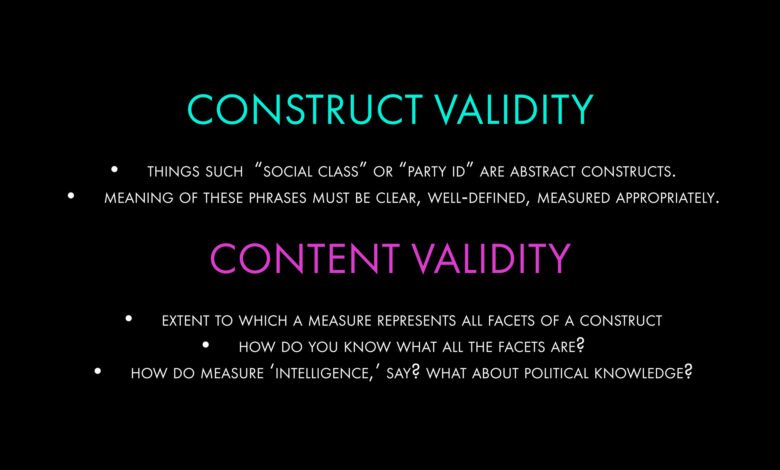
At its core, construct validity answers a fundamental question: Does this measurement truly capture the underlying theoretical construct we care about? A psychological construct is an abstract concept that cannot be observed directly, such as self-esteem, emotional intelligence, or job satisfaction. Researchers develop tests, surveys, or experimental tasks to measure these ideas indirectly.
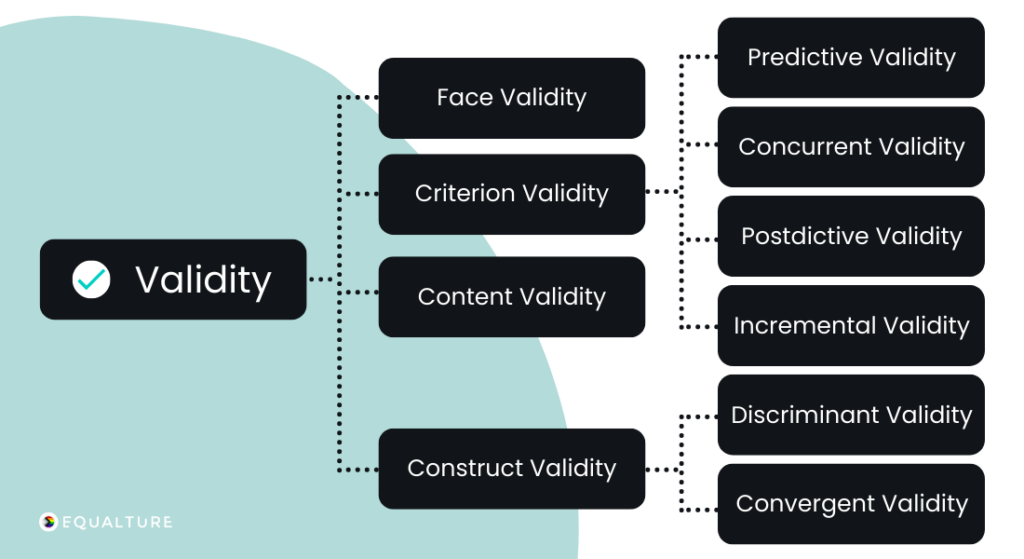
High construct validity means the scores from your instrument reflect the intended construct rather than something else. Low construct validity leads to flawed conclusions because the data may be measuring unrelated factors. This concept forms part of the broader umbrella of measurement validity, alongside content validity, criterion validity, and face validity.
For instance, a new questionnaire claiming to measure creativity should actually assess creative thinking patterns and not just general intelligence or vocabulary skills. Without solid construct validity, even sophisticated statistical analyses cannot salvage the research findings.
Why Construct Validity Matters in Research
Strong construct validity builds confidence in research outcomes and allows meaningful comparisons across studies. It supports theory development by ensuring that observed relationships truly relate to the concepts researchers intend to study. In applied settings, such as clinical psychology or organizational assessments, poor construct validity can lead to incorrect diagnoses, ineffective interventions, or misguided hiring decisions.
Regulatory bodies and academic journals increasingly demand evidence of construct validity before accepting new measurement tools. This emphasis reflects a commitment to scientific rigor and ethical research practices. When studies demonstrate robust construct validity, their findings contribute more reliably to cumulative knowledge in the field.
Types of Construct Validity
Researchers typically distinguish between two main aspects when evaluating construct validity: convergent validity and discriminant validity.
Convergent validity examines whether the measure correlates positively with other established tests that assess similar or related constructs. For example, a new anxiety scale should show strong positive correlations with existing, well-validated anxiety measures.
Discriminant validity, on the other hand, checks that the measure does not correlate too strongly with tests of unrelated constructs. The same anxiety scale should show weak or no correlation with measures of unrelated traits like mathematical ability.
Together, these two forms provide compelling evidence that the instrument behaves as theory predicts. Some frameworks also discuss nomological validity, which looks at whether the construct relates to other variables in ways consistent with broader theoretical networks.
How Researchers Establish Construct Validity
Building construct validity is an ongoing, cumulative process rather than a one-time achievement. Researchers begin by clearly defining the construct through careful literature review and theoretical analysis. They then develop items or tasks that align with that definition and test them through pilot studies.
Statistical methods play a key role. Confirmatory factor analysis helps verify that the underlying structure of responses matches the theorized dimensions of the construct. Researchers also examine patterns of correlations with related and unrelated measures, as mentioned earlier.
Experimental manipulations offer another powerful approach. If a scale claims to measure stress, scores should increase after participants undergo a stressful task and decrease following relaxation techniques. Known-groups comparisons provide further evidence — for instance, a depression inventory should differentiate between clinically diagnosed individuals and healthy controls.
Modern approaches often combine multiple sources of evidence, including qualitative feedback from subject matter experts and advanced statistical modeling. This multi-method strategy strengthens the overall case for construct validity.
Common Threats to Construct Validity
Several factors can undermine construct validity. Construct underrepresentation occurs when the measure fails to capture important aspects of the theoretical concept. Construct-irrelevant variance happens when the test includes elements influenced by unrelated factors, such as reading ability affecting a math anxiety scale.
Method bias, social desirability responding, and cultural differences can also introduce unwanted influences. For example, a personality assessment developed in one cultural context may not translate well to another without careful adaptation and re-validation.
Researchers must remain vigilant about these threats throughout the development and application of any measurement tool. Regular re-evaluation helps maintain construct validity as contexts and populations evolve.
Real-World Examples of Construct Validity
Consider intelligence testing. Early IQ tests faced criticism for potential cultural bias and narrow definitions of intelligence. Contemporary approaches, such as those incorporating multiple intelligences theory, demonstrate stronger construct validity by showing appropriate correlations with academic performance while distinguishing from unrelated traits like physical coordination.
In organizational psychology, employee engagement surveys must prove they measure genuine engagement rather than general job satisfaction or compliance. Strong construct validity evidence might include correlations with productivity metrics, low correlations with unrelated factors like pay level alone, and sensitivity to workplace interventions.
Clinical tools, such as depression inventories, undergo extensive validation to ensure they capture the multifaceted nature of depressive symptoms without being overly influenced by temporary mood states or comorbid conditions.
Construct Validity in Different Fields
The importance and application of construct validity vary across disciplines but remain fundamental. In education, it ensures standardized tests truly measure learning outcomes rather than test-taking skills. In healthcare, patient-reported outcome measures require robust construct validity to guide treatment decisions accurately.
Social science research relies heavily on construct validity when studying complex phenomena like prejudice, resilience, or social capital. Even emerging fields like artificial intelligence evaluation increasingly borrow concepts from traditional construct validity frameworks to assess whether AI systems genuinely demonstrate claimed capabilities.
Best Practices for Improving Construct Validity
Developing measures with strong construct validity requires thoughtful planning. Start with a clear theoretical foundation and involve domain experts early. Use diverse samples during validation to enhance generalizability. Combine quantitative and qualitative methods for richer insights.
Transparency matters too. Researchers should report their validation procedures thoroughly, including any limitations. This practice allows others to interpret findings appropriately and build upon the work effectively.
Continuous refinement represents another key principle. As new evidence emerges or societal contexts change, measures may need updating to preserve their construct validity.
Construct validity stands as one of the most critical concepts in measurement science. It ensures that the tools researchers use genuinely reflect the ideas they aim to study, forming the foundation for credible conclusions and practical applications.
By understanding and prioritizing construct validity, students, academics, and practitioners contribute to more reliable knowledge and better real-world outcomes. As research methods continue evolving, the principles behind construct validity remain timeless guides for rigorous inquiry.
Whether you are designing a new scale, evaluating existing instruments, or interpreting research findings, keeping construct validity front of mind helps maintain scientific integrity and meaningful progress in your field.
FAQ
What is construct validity in simple terms?
Construct validity is the extent to which a test or measurement tool accurately assesses the theoretical concept or construct it claims to measure.
What is the difference between construct validity and content validity?
Content validity focuses on whether the test items adequately represent the full domain of the construct, while construct validity examines how well the overall measure aligns with theoretical expectations through relationships with other variables.
How do researchers test for construct validity?
Researchers use methods such as convergent and discriminant validity correlations, factor analysis, experimental manipulations, and known-groups comparisons to accumulate evidence.
Why is construct validity important in psychology?
It ensures that psychological assessments truly measure intended concepts like intelligence or personality traits, leading to more accurate diagnoses, research findings, and interventions.
Can a test have high reliability but low construct validity?
Yes. A test can produce consistent results (high reliability) while still measuring the wrong thing or an incomplete version of the intended construct (low construct validity).
Read More:
RentSpree: Complete Guide to the Popular Tenant Screening and Rental Management Platform